





UArts Counseling
We are here to support and nurture our talented students. We provide short-term individual counseling, groups, outreach and prevention programming, as well as training, consultations and referral resources in our community.
The UArts Counseling Center is here for you, and we provide counseling both in-person and remotely by Zoom video conferencing online (a HIPAA-compliant version that protects your confidentiality).
If you have agreed in advance that the session will be online via Zoom, the therapist will email a link to you so you can access the session URL.
To reach us, email counseling@uarts.edu.
Office hours: Monday–Friday, 9:00 a.m.–5:00 p.m.
In-person and Virtual Walk-in Hours: Monday-Friday, 11:00 a.m.–1:00 p.m.
NEW CLIENTS: SCHEDULING APPOINTMENTS FOR COUNSELING/THERAPY
Due to increased demand, the Counseling Center will not be able to take on new clients for the rest of the 2024 spring semester. This means that you will not be able to see the same counselor or have consistent sessions, however you will still be able to utilize walk-in hours, 11am-1pm, Mon-Fri. Walk-in sessions are based on availability and are 20-30 minutes long. Students can email counseling@uarts.edu to schedule a walk-in appointment,or you can come to the center without an appointment. All current clients will continue to receive regular sessions as determined by your and your counselor To get started, email us: counseling@uarts.edu
If you've emailed us to schedule a walk-in appointment, please visit https://helpstartshere.
If you want to schedule a walk-in appointment, please be sure to email us directly to schedule the appointment; DO NOT just fill out the forms. While we monitor forms that come in, staff does not reach out to students to schedule appointments unless they contact us via email first.
If you are interested in pursuing long term counseling, we can connect you with services off campus.
If you are experiencing an emergency, please call emergency services at 911. You may call UArts public safety and reach the on-call response team at 215-717-6666 24 hours/day 7 days/week.
If you are interested in becoming a consistent client with us in the Counseling Center, you can email us when you return for the fall semester.
EXISTING & PAST CLIENTS: SCHEDULING APPOINTMENTS FOR COUNSELING/THERAPY
If you are an existing client, expect an email or a phone call from one of our staff members to help set up a follow-up appointment.
You are also welcome to email your counselor or last point of contact directly for scheduling.
-
Beth Couture (she/her), Director: bcouture@uarts.edu
-
Miranda Wang (she/her), Assistant Director: xwang@uarts.edu
-
Preya John (she/her), Staff Therapist: pjohn@uarts.edu
-
Chelsea Murphy (she/her), Case Manager: chmurphy@uarts.edu
Students seeking referrals for psychiatry and off-campus therapy services can make an appointment with our Case Manager, who will work with you to find appropriate resources
Meet UArts

(She/They) - bcouture@uarts.edu

(She/Her) - xwang@uarts.edu
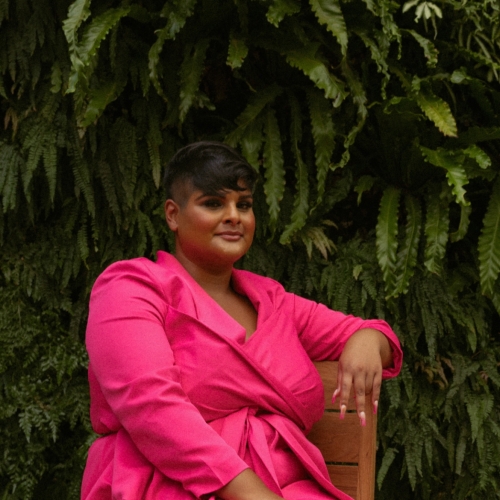
(She/Her) - pjohn@uarts.edu

(She/They) - chmurphy@uarts.edu

(She/Her) - vyang@uarts.edu

(They/Them); Temple University Social Work
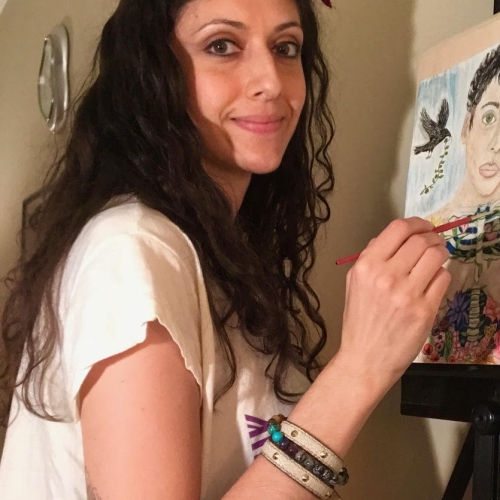
(She/They); Jefferson University Community & Trauma Counseling, concentration in Art Therapy
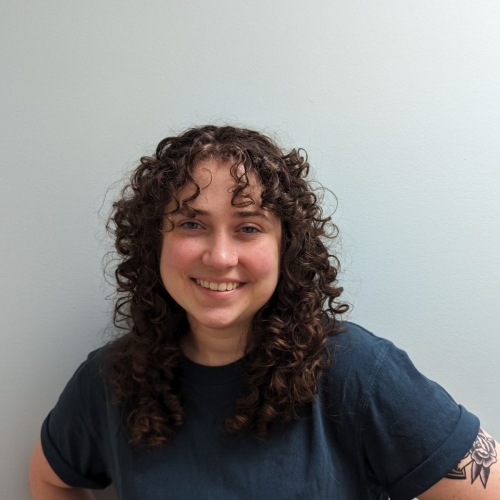
(She/Her); Bryn Mawr College Graduate School of Social Work and Social Research
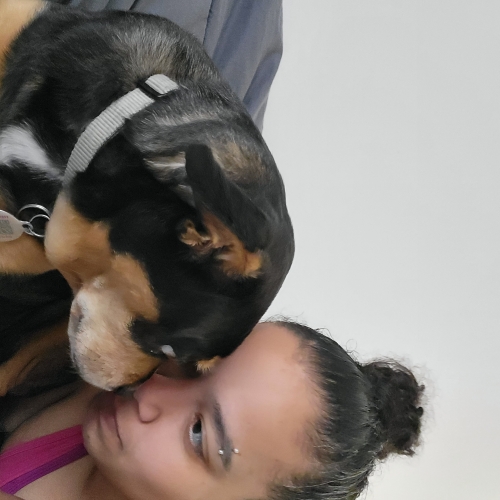
(She/Her); Drexel University Dance Movement Therapy

(She/Her); UPenn Counseling and Mental Health Services

(They/Them); Bryn Mawr College Graduate School of Social Work and Social Research

(She/Her); Jefferson University Community & Trauma Counseling

(she/her); Bryn Mawr College Graduate School of Social Work and Social Research
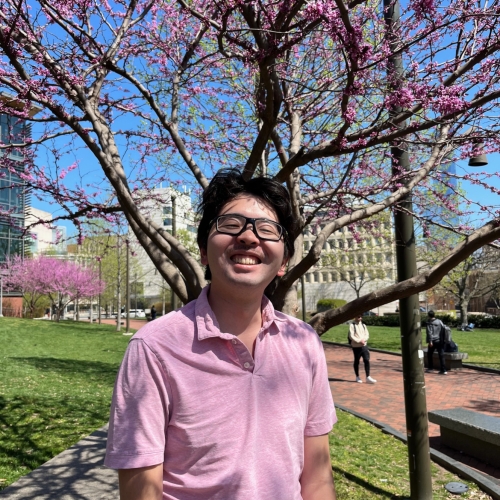
(He/him); UPenn Counseling and Mental Health Services
Gershman Hall, Room 205
401 South Broad Street
Philadelphia, PA 19107
Our hours are Monday - Friday 9 a.m. - 5 p.m and we can be reached at counseling@uarts.edu.
Our services are free and confidential.
Counseling Resources

Emergency Services
Contacts to help UArts students who may be experiencing a crisis.

Hotlines
Important national and local numbers for additional supports in a variety of areas relating to mental health and wellbeing.

Parent & Family Resources
Tips and advice for parents and families on how to best assist their student.

Faculty & Staff Resources
Tips for faculty and staff on options for how to best help students in distress.
Individual Counseling
At the student's first visit to the UArts Counseling Center, information and consent forms will be filled out prior to the session. During the first appointment, the staff and/or Clinical Trainee (under supervision) will begin to assess the student's needs and to determine the most effective interventions for treatment. Options may include counseling at the Center and/or a referral to a higher level of care.
Counseling sessions are completely confidential, and due to ethical and legal restraints, cannot be shared without written permission from the student. Exceptions to confidentiality involve situations where there is cause to believe that there is danger of harm to self or others.
Initial Meeting
Counseling starts with a 15-20 minute in-person walk-in/triage screening session with a UArts Counseling Center staff member. In Triage, we assess the nature and urgency of the students' concern to arrange the most appropriate next step to help.
When you contact the Center (either in person or by phone), you will be scheduled for this 15-20 minute in-person triage screening appointment. You will be asked a variety of questions, will have the opportunity to discuss your personal situation and ask questions.
During this private consultation, the student has the opportunity to discuss their concerns. If further services are indicated, the staff therapist or clinical intern/trainee may recommend individual counseling at UArts, suggest further evaluation, or refer the student to other services on or off campus. Sometimes, students find that this initial consultation meets their needs and requires no further services.
At the end of this meeting, appropriate options will be reviewed with you. These could include an appointment for an initial meeting to pursue short-term counseling at UArts and/or referral to other resources on campus or in the community. Crisis and urgent situations are addressed as needed and may involve collaboration with the UArts Public Safety staff if emergencies occur.
Individual Therapy
Short-term individual counseling may be offered to help students navigate life stressors and to gain a deeper awareness about the basis of their concerns and the need for problem-solving skills. For issues that would be better resolved through longer-term individual counseling, a referral to a therapist community may be recommended.
UArts offers short-term counseling. If a student is interested in a longer term therapy relationship, we can help by offering referrals to outside low-fee and sliding scale therapists and advise on arranging services in the community. Keep in mind, however, that no student is ever turned away and that length of treatment at our Center is determined on a case-by-case basis.
Group Counseling
Support Groups
Each semester UArts Counseling may offer a variety of therapy groups. Therapy groups are a form of counseling, focusing on developing insight and behavior change. Five to eight group members (who all must be current UArts students) meet with one or two group therapists once per week for 1.5 hours throughout the semester. The starting dates will vary and enrollment is free. Group therapy provides a unique opportunity for small groups of students to meet and share common concerns, explore difficulties and learn new skills. Depending on student need and attendance, we can offer support groups to UArts students pertaining to specific populations as well as specific concerns (i.e., LGBT students, social skills training, stress management, art therapy groups, etc).
How Do I Join a Group?
If you are already working with a therapist at UArts Counseling, express your interest to your therapist and a referral can be made. If you are not currently utilizing our services, please come in for a triage walk-in screening and a referral to a group (either forming or for the following semester) can be made. This screening will help to determine if a group may be helpful to the student and also to assess if enough students on campus are interested in a particular group to be offered. Once a group forms, it is usually closed to new members until the following cycle. During group sessions, members discuss issues of concern and offer support and feedback to each other. Confidentiality is strictly respected.
NOTE: Students should not pursue services at UArts Counseling for the sole purpose of obtaining a letter of support relating to Educational Accessibility (i.e. academic accommodations) and/or class absences. UArts Counseling does not provide letters at the time of an initial consultation and cannot provide documentation regarding a student's mental health without a history of services at UArts Counseling during the specified time period. If necessary, students are encouraged to seek letters of support from individuals directly involved in their care such as past or present psychological/psychiatric providers or medical doctors and practitioners.
Internships: Clinical Social Work, Counseling and Creative Arts Therapies (Art, Music & Dance/Movement Therapy)
The Clinical Training Program at the University of the Arts provides experience in a wide range of mental health issues and treatment approaches among college student populations. The UArts Counseling Center is committed to a multidisciplinary training approach and is open to advanced graduate students in Clinical Social Work, Counseling and Creative Arts Therapies.
UArts Counseling Center Internships and field placement opportunities enable the acquisition of necessary competencies for mental health treatment in college and university counseling centers with the emerging adult population. Internships are typically 21 hours/3 full days per week. The interns are trained in developing the following skills: interview assessment, ongoing short-term solution-focused counseling, case conceptualization, consultation, emergency assessments and crisis intervention, as well as triage, case management, possible groups and developing outreach programming for health and wellness in Student Affairs. Other training activities include: weekly Counseling staff meetings, weekly individual supervision and group supervision, as well as case presentations and didactic seminars.
There is also a Creative Arts Therapies track (currently in development) in which graduate students who are studying Art Therapy, Music Therapy and Dance Therapy will have an opportunity to gain valuable experience in counseling with our unique artistic student population.
Inquiries:
The UArts Counseling Center currently works with select graduate programs directly to recruit interns for our programs. If interested, please contact your graduate program field coordinator to inquire further. Unsolicited applications will not be accepted.